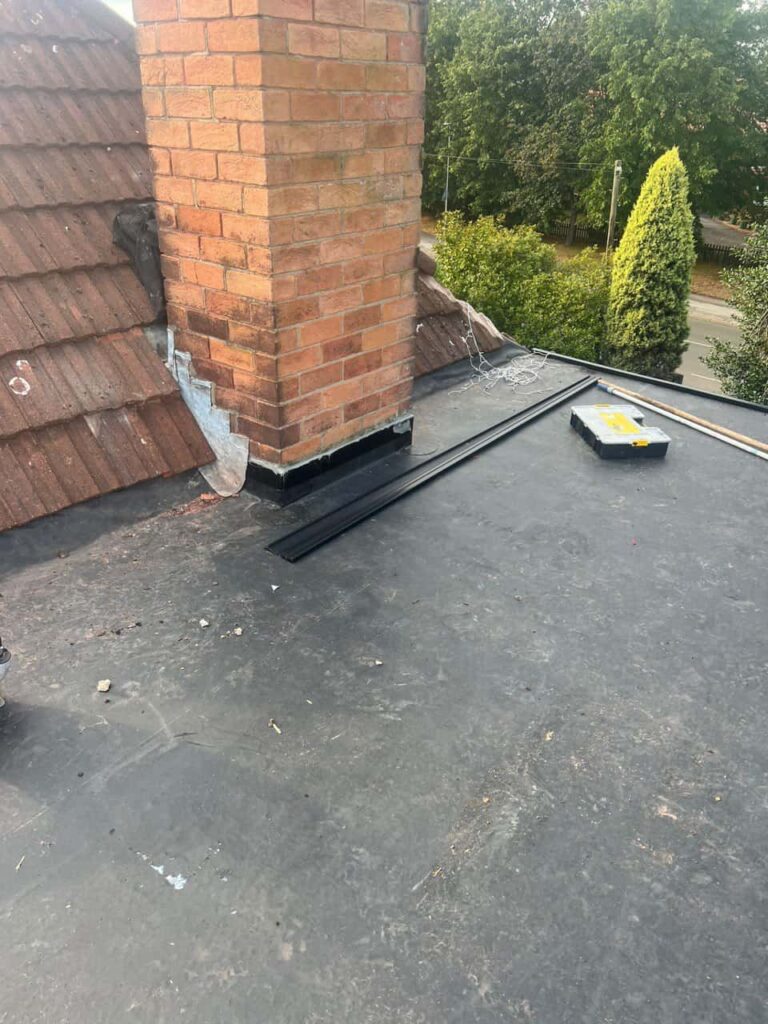
A roof leak that appears to stop can easily create the impression that the problem has resolved itself. Unfortunately, roofing defects rarely repair themselves. The visible dripping may have ceased because the rain has stopped, the wind direction has changed or moisture is now following a different route through the roof.
For property owners in Lutterworth, Leicestershire, a previous leak should still be investigated even when the affected ceiling has dried. Identifying the entry point early can prevent a small defect from developing into more widespread deterioration.
Why a Roof Leak Can Disappear Without Being Resolved
Roof leaks are often intermittent. Their appearance can depend on rainfall intensity, wind direction and how long the roof remains wet. A defect may therefore allow water inside during one period of rain but appear completely dry during another.
The absence of visible dripping only confirms that water is not currently reaching that particular point. It does not establish that the roof covering and the materials beneath it are sound.
The Leak May Depend on Wind Direction
Rain does not always fall vertically. Strong winds can drive water beneath slightly lifted tiles, through deteriorated flashing or into gaps around roof junctions.
A roof may consequently leak only when the weather approaches from a particular direction. During calmer rainfall, water may continue to drain over the vulnerable area without entering. This makes intermittent leaks particularly difficult to diagnose without examining the surrounding roof details.
Moisture May Be Taking a Different Route
Water entering through the roof covering can travel along underlay, battens, rafters and other surfaces before reaching the ceiling. Its route may change as materials become wet or dry.
The next visible damp patch could therefore appear away from the original location. In some cases, moisture can remain within the roof space without producing an immediate indoor sign. Investigating only the ceiling mark may fail to locate the actual entry point.
Roofing Materials Can Temporarily Close a Gap
Roofing components naturally expand and contract as temperatures change. A small opening around flashing, felt or another junction may narrow during particular conditions and reopen later.
Debris can also temporarily block an exposed gap. While this may stop water entering for a short period, it is not a dependable repair. Further movement or severe weather can expose the weakness again.
The Underlay May Be Holding Back Water
Tiles and slates form the primary roof covering, while the underlay beneath them provides additional protection. If water passes through a damaged section of covering, sound underlay may redirect it towards the eaves.
However, persistent moisture can weaken older underlay or find its way through tears and fixing points. A leak may appear to have stopped indoors while the concealed layer continues to experience water exposure.
Hidden Materials May Remain Damp
Ceilings often dry more quickly than concealed timber, insulation and other materials within the roof space. A stain that no longer feels wet does not necessarily mean the entire area is dry.
Repeated exposure can gradually affect battens, roof timbers and internal finishes. Damp insulation may also remain ineffective until it has dried properly. A professional inspection can help determine whether moisture has affected areas beyond the visible ceiling mark.
The Original Defect Could Become Worse
Minor roof faults are exposed to continuous weathering. A small crack in flashing can widen, loose mortar may continue to deteriorate and a slightly displaced tile can move further during strong winds.
Addressing the fault while it remains localised can prevent surrounding components from becoming involved. Waiting for the leak to return may allow the opening to enlarge and increase the area exposed to moisture.
Record the Conditions When the Leak Appears
Information about the leak can help a roofer identify its likely source. Useful details include:
- which room and part of the ceiling were affected
- whether the mark appeared during heavy or prolonged rain
- whether strong winds accompanied the rainfall
- how quickly the damp became visible
- whether the same area has leaked previously
- whether any tiles, mortar or other debris have been found outside
Photographs of the damp patch can also be helpful, particularly if it has dried before the roof is inspected.
Why Professional Leak Detection Matters
The visible mark is often only the final stage of the water’s route. Effective roof leak detection involves assessing the covering, ridges, valleys, flashing, junctions, underlay and accessible roof space.
This wider inspection can distinguish between an isolated surface defect and a problem affecting several roofing components. The resulting repair can then address the source rather than simply treating the interior symptom.
Conclusion
It is not advisable to ignore a roof problem simply because it has stopped leaking. Changes in rainfall, wind direction, temperature and the route taken by water can all make a continuing defect appear temporary.
If you have noticed an intermittent roof leak at your property in Lutterworth, Leicestershire, Lutterworth Roofing Repairs can inspect the affected area and identify the likely cause. Contact the team to arrange a professional assessment before the leak returns or concealed damage develops further.
Call us on: 01455 242 599
Click here to find out more about Lutterworth Roofing Repairs
Click here to complete our contact form and see how we can help with your roofing needs.